

The Warm Months Feel Like the Wrong Time for Dental Problems — But Infections Don’t Take Vacations
Summer in Licking County is finally here. The Buckeye Lake crowds are back, graduation parties are in full swing, and the last thing on anyone’s mind is sitting in a dental chair. But here’s the hard truth: a nagging toothache that you’ve been brushing off since spring doesn’t get better on its own—it gets infected. And once a tooth infection takes hold, no amount of ibuprofen, ice packs, or willpower is going to resolve it.
At Newark Dental Associates, Dr. Brian Stickel and our team see it every summer. A patient waited too long, a holiday weekend hit, and what could have been a straightforward root canal turned into a dental emergency—swollen, painful, and impossible to ignore. We don’t want that for you or anyone in our community.
This post is your honest guide to why summer is actually the riskiest season to delay tooth pain treatment, what warning signs mean you need care now, and why modern root canal therapy at our Newark, OH, office is nothing like the experience you’re dreading. Call our Newark dental practice at (740) 344-4000 to schedule your appointment.
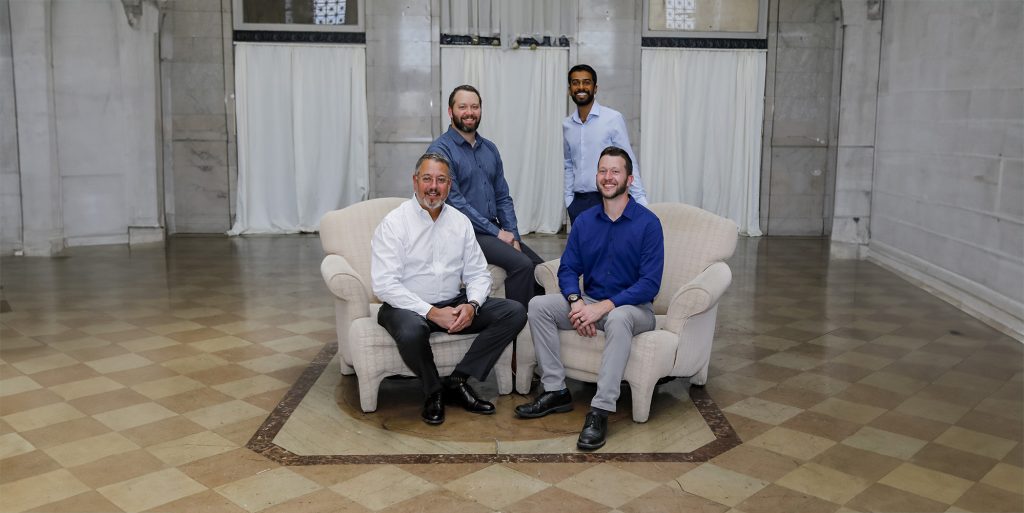
Why Newark Patients Trust Dr. Brian Stickel for Root Canal Therapy
Dr. Brian Stickel has built his practice around one simple idea: patients deserve to be comfortable, informed, and respected—especially when they’re in pain and anxious. As a dentist in Newark, OH, with years of hands-on experience in root canal therapy, Dr. Stickel takes a comfort-first approach that starts before you even sit in the chair.
At Newark Dental Associates, we use advanced digital X-rays and 3D cone beam CT (CBCT) imaging to precisely map the root canal anatomy before beginning treatment. Research shows that CBCT imaging identifies additional canals compared to traditional X-rays alone — canals that, if missed, could lead to treatment failure. We don’t miss them.
We also work with most major insurance carriers and provide upfront cost estimates before treatment. We never want a patient to delay care because of uncertainty about what something will cost.
We welcome patients from Newark, Heath, Granville, Johnstown, and Pataskala, OH — and we routinely see patients from across Licking County who are looking for a dentist they can actually trust with something this important.
Summer Creates the Perfect Storm for Delayed Dental Care
There’s a pattern dentists across the country see every year: patients delay treatment in the spring because they’re “too busy,” push it through summer because of vacations and events, and then arrive in the fall with a serious infection that’s far harder — and more expensive — to treat.
Several factors make summer specifically dangerous for anyone suffering from tooth pain:
- Schedules fill up fast. Between summer travel, kids out of school, outdoor events, and holidays like Memorial Day and the Fourth of July, patients tell themselves they’ll “deal with it after the summer.” That’s a gamble with your health.
- Holiday weekends leave you without options. Dental offices are closed on major holidays. If your tooth abscesses over Memorial Day weekend, your choices are an emergency room visit — which averages $749–$1,500 and can’t actually treat the infection — or waiting in pain until Tuesday.
- Heat and dehydration can intensify oral pain. Summer heat and increased physical activity can exacerbate existing inflammation, making an infected tooth feel significantly worse.
- Sugary summer foods accelerate decay. Ice cream, lemonade, sweet tea, and cookout fare mean more sugar exposure. For a tooth that’s already compromised, this can speed up the decay reaching the pulp.
- Kids’ dental emergencies compete for your attention. Parents especially tend to prioritize their children’s dental appointments over their own—meaning their own pain gets ignored even longer.
The bottom line: summer is when people are most likely to delay, and also when the consequences of delaying are most disruptive. A same-day appointment now is far better than a dental emergency on the Friday before a long weekend.
How Many Root Canals Are Actually Performed — And Why That Number Matters
If you’ve been putting off tooth pain because you think it’s not that serious, consider this: according to the American Association of Endodontists, more than 15 million root canals are performed every year in the United States — roughly 41,000 every single day.
That’s not a rare procedure for extreme cases. It’s one of the most common restorative treatments in dentistry, and the vast majority of those patients are people just like you who noticed sensitivity or pain, got evaluated, and took action before the problem escalated.
Research reports that root canal therapy has a clinical success rate of approximately 95% and that teeth treated with root canals can last a lifetime with proper restoration and oral hygiene. With statistics like these, the fear of the procedure itself simply doesn’t hold up — especially when compared to the very real consequences of not treating a dental infection.

Warning Signs That Mean You Need to Call Us Before the Weekend
Tooth pain exists on a spectrum. A mild twinge after biting something cold is different from the kind of pain that signals a pulp infection. Here’s how to tell the difference—and when to stop waiting:
- Persistent, throbbing pain that doesn’t go away: Occasional sensitivity to cold is usually surface-level. Pain that throbs, lingers, or wakes you up at night is nerve involvement—and that means the inner tissue of your tooth may already be infected.
- Sensitivity to heat that lasts more than a few seconds: Cold sensitivity can point to enamel issues. Heat sensitivity that lingers is a much more specific warning sign of pulp infection.
- Sharp pain when biting or chewing: If biting down causes a sharp jolt of pain, you may have nerve damage, a crack, or an infection at the root tip that’s under pressure when you chew.
- Swelling in your jaw, cheek, or gums: Swelling—especially with a visible bump or “pimple” on the gum near the tooth—indicates a dental abscess. This is an infection that has already spread beyond the tooth and into the surrounding tissue. This requires immediate care.
- Tooth darkening or discoloration: A tooth that has darkened or changed color without an obvious cause may have dying or dead internal tissue—a sign the pulp has been compromised.
- Persistent bad breath or a foul taste: Bacterial infection releases toxins that cause a distinct bad taste or odor that doesn’t respond to brushing. This is a direct signal that an active infection is present.
If you’re experiencing any of these symptoms — especially with Memorial Day weekend just around the corner — don’t wait. Call Newark Dental Associates at (740) 344-4000. We offer may same-day appointments for patients in pain.
What Happens If You Keep Waiting? The Real Cost of Delayed Treatment
We hear it all the time: “It’s not that bad yet.” The problem with dental infections is that “not that bad yet” can become “emergency room visit” faster than most patients expect.
When a tooth’s pulp is infected, that infection doesn’t stay contained. Bacteria spread. What begins as a localized abscess can travel to surrounding teeth and the jawbone. In rare but serious cases, untreated dental infections have spread to the neck, airway, and even the brain—a life-threatening condition known as Ludwig’s angina or cavernous sinus thrombosis.
Even in less severe cases, the financial cost of waiting is significant. Emergency room visits for dental pain average $400 to $1,500—and the ER cannot perform root canal therapy. They can prescribe antibiotics to temporarily suppress the infection, but without definitive dental treatment, the infection comes back. You’ve now paid for an ER visit and still need the root canal.
There’s also the tooth itself to consider. The longer an infection goes untreated, the more the surrounding bone and tissue are damaged. A tooth that was perfectly saveable in May may require extraction by August—meaning the cost shifts from a root canal and dental crown to an extraction plus a dental implant or dental bridge, which can run $3,000 to $5,000 or more.
“But I Heard Root Canals Are Terrible”—Let’s Address That
The fear of root canals is real, and we don’t dismiss it. But we do want to give you the data, because the reputation simply doesn’t match modern reality.
An interview by Harvard Health Publishing explains that with modern anesthetics and techniques, patients who are undergoing a root canal shouldn’t experience any pain and that it’ll feel like getting a cavity filled or a tooth extracted. The fear of the procedure is almost always worse than the procedure itself.
Here’s what you can expect at Newark Dental Associates:
- We apply a topical anesthetic before any injection, so you barely feel the needle.
- We use highly effective modern local anesthetics and don’t begin until you confirm you feel nothing.
- For patients with dental anxiety, we offer nitrous oxide, oral sedation, and full IV sedation—so you can be as relaxed as you want to be.
- Most patients describe the procedure as feeling like a filling. The pain you feel before treatment — from the infection — is almost always worse than the root canal itself.
- Most procedures take one to two appointments of 60 to 90 minutes, and patients typically return to normal activity within 24 to 48 hours.

Don’t Let a Dental Infection Derail Your Summer—Call Newark Dental Associates Today
You worked hard for this summer. Don’t let a tooth infection—one that is completely treatable—end up in an emergency room on a holiday weekend or force you to cancel plans you’ve been looking forward to for months.
Dr. Brian Stickel and the team at Newark Dental Associates are here to help. Whether you’ve been ignoring pain for a few weeks or you’re waking up with a throbbing tooth this morning, we want to hear from you. Modern root canal therapy is comfortable, fast, and designed to save your tooth and get you back to your life.
Contact our dental office in Newark at (740) 344-4000 to request an appointment. Same-day appointments may be available for patients in pain. We welcome patients from Newark, Heath, Granville, Johnstown, and Pataskala, OH.